

Advantages Checklist
eBacon's exclusive bona fide fringe trust is a proven money saving $$$ solution! See all the advantages...

Integrations
Supported Accounting Packages
API

A wage determination is a document issued by the U.S. Department of Labor that sets required wage rates and fringe benefits for specific job classifications on prevailing wage projects. Understanding how to read it correctly ensures workers are paid properly and helps contractors avoid compliance risks.
How to read a wage determination correctly is one of the most important steps in Davis-Bacon compliance. It is one of the most misunderstood and most critical skills in prevailing wage compliance. Wage determinations control worker pay, fringe benefits, classifications, geographic coverage, and audit outcomes. For payroll teams, misreading even one section can result in underpayments, restitution, or withheld contract funds.
A wage determination must be read in full. Rates alone are not enough. Classifications, definitions, geography, modifiers, and footnotes all matter.
This quick guide walks through how to read a wage determination correctly, using the same technical details auditors and regulators rely on.


Wage Determination – A document issued by the U.S. Department of Labor that sets minimum wage and fringe benefit requirements for laborers and mechanics on Davis-Bacon covered projects.
Classification – The type of work an employee performs on a project. Classifications are duty-based, not job-title-based.
Fringe Benefits – Hourly benefit amounts that must be paid in addition to base wages, either as bona fide benefits or cash.
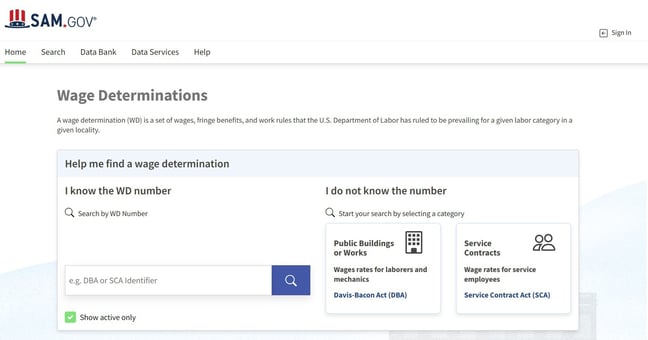
When searching for determinations on SAM.gov, follow these steps:
Compare older and newer revisions to understand rate changes
2. Filter Your Search:
3. Review Revision History:
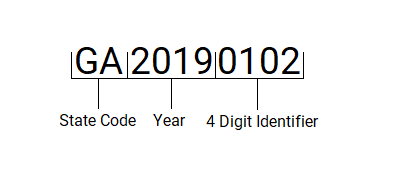
Each wage determination includes an identifier with three components:
These components help confirm you are using the correct determination for the contract and award date.
Davis-Bacon wage determinations fall into four construction categories:
Always read both:
Some determinations list multiple construction types or restrict scope to specific work, such as dam construction only. Never assume coverage based on the category name alone.
Unlike Davis-Bacon determinations, Service Contract Act determinations do not use construction categories. They list classifications by region only, and those classifications can be vague.
Definitions may be modified within the determination. Read carefully to confirm the work performed falls within scope.
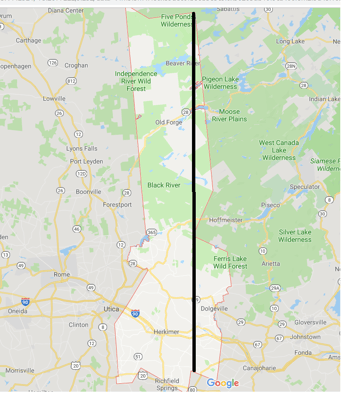
Geographic scope is not always straightforward.
Key considerations:
A county listed at the top does not guarantee all classifications apply countywide.
Example:
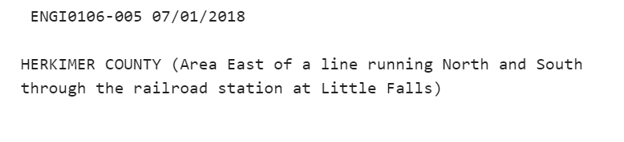
In Herkimer County, New York, classifications may differ east or west of the Little Falls railroad station. Mapping tools like Google Maps are often required to confirm coverage.
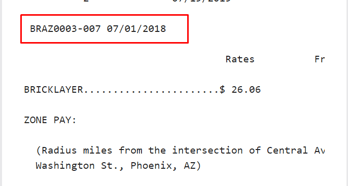
Each classification group begins with a rate identifier, such as:
Rate identifiers explain how the rate was derived. They do not change how classifications are applied.
Rates may vary based on:
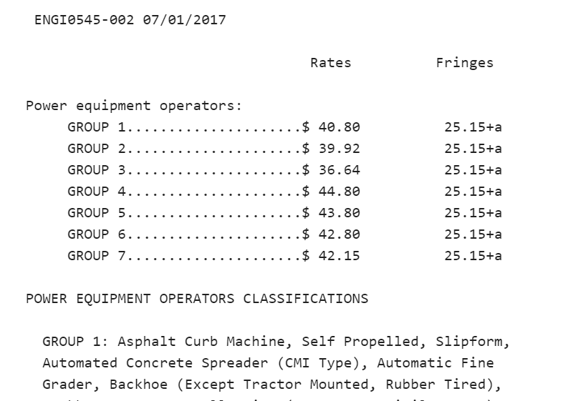
Power equipment operators are commonly grouped by numbered categories, each listing qualifying equipment. Accurate time tracking by equipment type is essential.
To identify the correct classification:
Never assume classifications are consistent across different determinations, even within the same state.
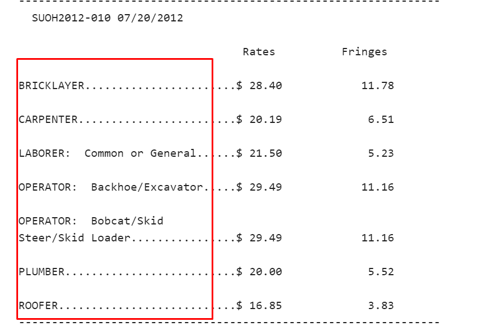
Each classification includes:
Fringes:
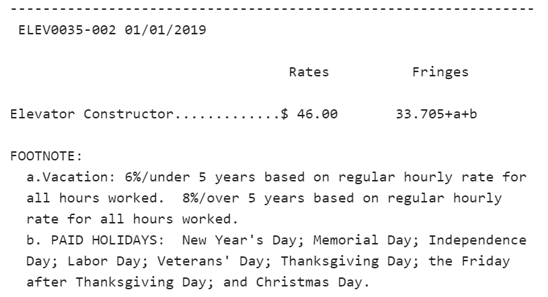
Some classifications include additional fringe modifiers such as:
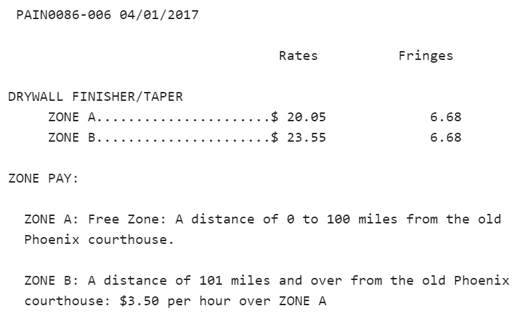
Zone pay may apply for remote or difficult locations and is often based on distance measurements.
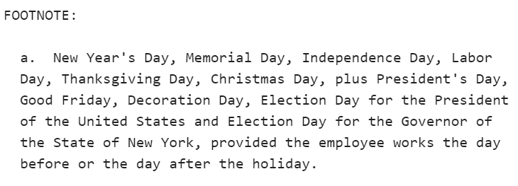
Holiday requirements may:
Always check both the determination and applicable state law.
Many determinations use numbered groups instead of descriptive classifications:


Don't risk costly penalties or back-wage payments. Reach out to eBacon for a personalized tour so that you can learn to handle the complexities of prevailing wage compliance while you focus on delivering quality projects on time and within budget.
A wage determination is a formal decision or ruling by a government authority that establishes the minimum wage rates and fringe benefits for various construction job classifications within a specific geographic area. These determinations are often applied to government-funded construction projects and are designed to ensure that workers receive fair compensation. The wage determination outlines the prevailing wage rates that contractors must pay to employees working on the project, taking into account the different job classifications and types of work involved. It serves as a guide for contractors to adhere to specific labor standards and helps prevent the exploitation of workers by setting minimum wage standards for the relevant industry and region.
A wage determination number is a unique identifier assigned to a specific wage determination issued by a government agency. This number is used to differentiate and reference individual determinations, making it easier for contractors, employers, and other stakeholders to identify and apply the correct prevailing wage rates for a particular project.
The wage determination number typically includes information such as:
Contractors and employers refer to the wage determination number when determining the appropriate prevailing wage rates and classifications for specific job roles within a given project, ensuring compliance with prevailing wage laws and regulations.
The material presented here is educational in nature and is not intended to be, nor should be relied upon, as legal or financial advice. Please consult with an attorney or financial professional for advice.
.jpg?width=153&height=191&name=HensleysPaving-thumb%201%20(1).jpg)
